
Wacyk Antoni "Gniewomir"
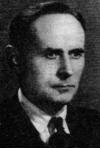 s. of Karol and Erazmina née Żmigrodzka, born Nov. 22, 1905, in Kuryłówka Murowana (Podole zazbruczańskie).
In 1918-1920, he was a student at the Polish Social Gymnasium in Kamieniec Podolski and a scout of the III Kamieniecka Drużyna Harcerska. His family moved within the borders of the Second Polish Republic, but part of it remained in the Ukrainian SSR.
He passed his matura in Lviv in 1926. He then enrolled at the Faculty of Law of the University of Jana Kazimierza in Lviv. From October 15, 1927, to April 21, 1928, he completed the Infantry Officer's Basic Course in Gródek Jagielloński as a platoon leader cadet. In 1932, he was appointed a reserve second lieutenant.
From 11 Dec 1928, back at the Faculty of Law of the University of Józef Piłsudski, which he completed in 1932, receiving the degree of Master of Laws.
He worked as a postal clerk (state-owned enterprise “Polish Post, Telegraph and Telephone”) in Lviv.
In 1935, he married Felicja Leokadia, née Loewenstamm (1898-1970), and they had no children.
In the fall of 1937, he was transferred to Warsaw to the position of referendar in the Ministry of Posts and Telegraphs. In the summer of 1939, he was promoted to the position of secretary to the deputy minister of this resort (who was Col. Tadeusz Argasiński).
After arriving in Warsaw, he was introduced to the activities of "Zadruga", joining its editorial team and adopting the Zadruga name "Gniewomir". In addition to the aforementioned pseudonym, he used the following pseudonyms in his publications in the "Zadruga" magazine: "Mieczysław Nowica", "Michał Pohost", and "W. Sikorski". His wife, Felicja, also became a member of Zadruga.
In September 1939, he was evacuated along with the staff of the Ministry of P and T, and on September 17, he crossed the Romanian border at Kuty. Through Romania and Yugoslavia, he reached France in January 1940, where he reported to the Polish Army Assembly Point in Paris. He underwent training in the French army and then served in the 12th Infantry Regiment. He was evacuated to Great Britain on board the s/s “Chorzów” and continued to serve in the Polish Army. During his service, he completed a course for translators (Edinburgh 1942) and an administrative course (London 1943). Encountering the social and cultural reality of Great Britain strengthened his Zadruga convictions (especially regarding the impact of Protestantism, particularly Calvinism, on social life), and his fascination with many British solutions will be lasting and evident in his works as well as in his private statements. He published a bulletin called „Goreją Wici” there, promoting Zadruga ideas.
In 1945, he publishes a book in Scotland. Culture of No-History, being a popular exposition of the views of Zadruga on the history of Poland and Slavic peoples.
In June 1946, he returns to the country and settles initially in Częstochowa, where his wife and her family were staying. He reestablishes contact with Jan Stachniuk and those Zadruga members who survived the war. In the fall of that year, he settles in Zabrze, where, along with Józef Słonczyński, he founds an oil mill, and later a model workshop for foundry castings (managed by Słonczyński). This last endeavor provided him with a source of livelihood and allowed him to financially support the printing of Stachniuk's works, which was also the intended goal of these endeavors. At this time, disagreements arose between him and Stachniuk regarding the tactics of the Zadruga circle in the new political reality and the quality of individuals recruited by Bogusław Stępiński. This element was at best Cossack-like, and therefore, at that stage of Zadruga's development, rather a burden. Stachniuk disagreed.(Wacyk, Jan Stachniuk…t I, p.201).
From March 1948, he lived in Wrocław and worked as an office clerk at the Nadodrzańskie Zakłady Przemysłu Organicznego „Rokita” (Oder River Organic Industrial Plants) in Brzeg Dolny. His contacts with “Stoigniew” and the Zadruga circle ceased, which was also influenced by the arrest of Stachniuk and the general conditions prevailing during the Stalinist period. In 1954, he sent small sums of money to Mrs. Franciszka Stembrowicz, who maintained contact with the imprisoned founder of Zadruga at that time.
In 1955, after being released from prison, Stachniuk reestablished contact with him, which continued until his death in 1963. He was one of the people who financed the first tombstone for "Stoigniew" at Powązki Wojskowe Cemetery in Warsaw. Wacyk also maintained ties with other members of the Zadruga circle in the country (J. Brueckmann, M.S. Czarnowski, J. Kłopocka, B. Stępiński, D. Tilgner) and abroad (W. Kwaterniak, T. Then), along with Stachniuk's surviving sister from the war and her family (Maria Witwicka, who lived in Bystrzyca Kłodzka after 1945).
In 1969, he translated Humanity and Culture on English to interest a publisher in English-speaking countries, assisted by T. Then and D. Tilgner, but without success.
In 1971, he retires while still living in Wrocław.
In 1971, he received from Damazy Tilgner the manuscripts of 3 unpublished works by Stachniuk (Christianity and Humanity, The "Slavic myth" i The Pathways of Cultural Revolution in Poland). He made copies of them, providing indexes and checking the citations; these typed copies served as the basis for the first editions of these works after 1989.
He tried very cautiously to remind of the Zadruga's achievements through letters to newspapers when someone raised this issue, and also to gain new supporters. In the 1970s, Zdzisław Słowiński and Stanisław Potrzebowski contacted him. At the beginning of the 1970s, Bolesław Tejkowski contacted him, but the acquaintance was broken off after he borrowed pre-war Zadruga then refusing to return them.
After the death of his wife Felicja, he married Kazimiera Grygier, also childless (but he had two step-sons from his second wife's previous marriage).
He would type his texts, which were also commentaries on current events, and distribute them among interested people. Some were published after 1989, while others were lost.
In 1988, he developed the rite of postrzyżyn for the family of Zdzisław Słowiński, which were performed on Ślęża.
In 1990, he began cooperation with the Wrocław-based group led by Zdzisław Słowiński. The "Toporzeł" Publishing HouseHe published brochures there that explained Zadruga views in an accessible way. He also participated in preparing new editions of Stachniuk's works that were released by this publishing house.
He also wrote poems, but he lacked a serious poetic talent.
After 1989, he conducted extensive correspondence with individuals interested in the content of his publications.
He died in Wrocław on 23 August 2000. He was buried at Grabiszyn Cemetery (Wrocław).
Prepared by: Tomasz Szczepański
Sources:
completion certificate of the Infantry School No. 10, student's index;
student ID card of the University of J. Kochanowski
absolutorium;
diploma, letter from the Ministry of Posts and Telegraphs from 1936;
employee's ID card of the Ministry of Posts and Telegraphs No. 353;
pass to the Warsaw Citadel;
Identity Card No. 568 (Romanian);
identity card sheet; Allied Military Identity Card no A 20196;
certificate of completion from the Ministry of Reconstruction of Public Administration, London, August 31, 1943;
power of attorney from the Nadodrzańskie Zakłady Przemysłu Organicznego “Rokita” Brzeg Dolny, April 4, 1949;
membership card of the ZZ Pracowników Przemysłu Chemicznego RP
military ID card of a reserve officer;
certificate of completion of an accounting course from 1961
employee ID card;
legitymacja ZZ Emerytów Rencistów i Inwalidów;
Extract from the death certificate of Felicja Leokadia Wacyk, – photocopies in the author's collection.
Photograph with the poem Świąszczyca in the author's collection.
IPN 00231/153 t 1. k 1-30 (Information on "Zadruga", from April 21, 1950);
Letter to Tomasz Szczepański - in the author's collection.
Grott, B. Religion, Civilization, Development: Around the Ideas of Jan Stachniuk, Krakow 2003
Editorial Obituary Antoni Wacyk "Odala" No. VII, Summer 2001
Słowiński Z. Farewell to Antoni Wacyk "Odala" No. VII, Summer 2001
Szczepański T. The Zadruga Movement and Native Faith in the PRL (1956-1989) "State and Society" 4/2009
Szczepański T. Interview with Dr. Stanisław Potrzebowski, Head of Rodzima Wiara, "Trygław" 12 (2010)
This same Conversation with Dr. Zdzisław Słowiński, owner of Toporzeł Publishing House, therein
This Political activity of Bolesław (Bernard) Tejkowski until 1989 in: „Religion. Politics. Nation…”, ed. R. Łętocha, Kraków 2010
Oral information: Brueckmann Józef, Kołowrocki Andrzej.
Bibliography of works:
40
Culture of the Timeless Scotland 1945 (2nd ed., Wrocław 2010)
Jan Stachniuk 1905-1963. Życie i dzieło, vol. I 1976, vol. II 1978, vol. III 1984, duplicated ts., photocopy in the author's collection
Mit polski Zadruga Wrocław 1991 (previously typescript, distributed in 1989 with 20 copies and in 1990 with 40 copies)
Rimas Zadrugas Wroclaw 1992
Polish Philosophy - Zadruga, Wrocław 1994
Na pohybel katolictwu – Zadruga Wrocław 1995
Articles:
Slavic "The Voice of the Free" 1/1948
The Strength of Christianity "Voice of the Free" 4/1948
Correction "Najwyższy Czas" 2/1996
Introduction to J. Stachniuk's "Humanity and Culture" (Wrocław 1996)
Foreword to J. Stachniuk "Christianity and Humanity" Wrocław 1997 (ms. 1989)
Jan Stachniuk 1905-1963. An Attempt at Characterization, "Trygław" No. 2, Spring 1998
Another defeat and more illusions of the Pole-Catholic, "Trygław" No. 12, spring 2010 (ms. 1982)
Translations:
From Ukrainian:
Łozko H.S. The Ukrainian Native Faith, Wrocław 1997