
Z-Ź-Ż
Zasada Ludwik „Przemko"
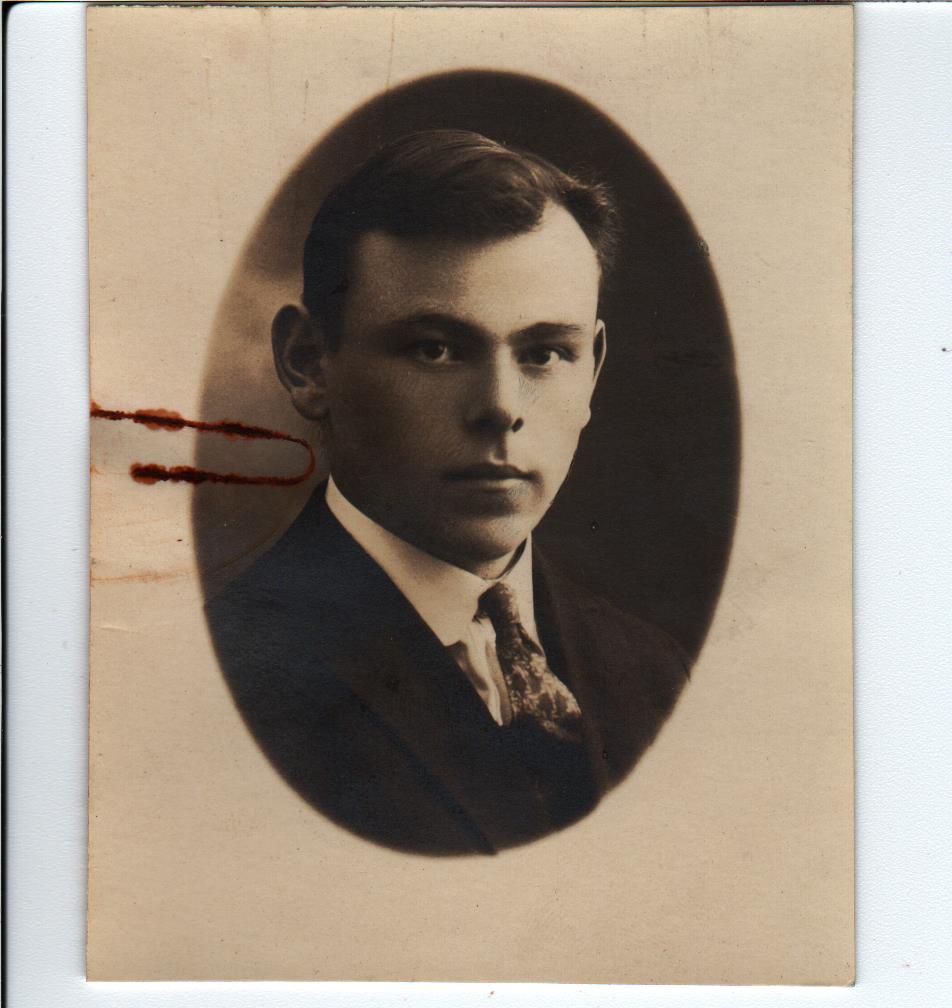
Born on October 7, 1907, in Złoty Potok (until 1952, the name Potok Złoty was used), son of Franciszek (railway worker - switchman) and Wiktoria née Jakubiak. The large family lived in difficult material conditions.
He completed primary school in 1922 – with interruptions from 1914-1915 due to wartime activities. He then moved with his family to Kowel, where his father got a job on the railway, and there from 1922-1927 he attended the State Gymnasium named after Juliusz Słowacki which he completed with the maturity exam of the humanities type in 1927. Considering that Jan Stachniuk also attended the same high school at the same time (matriculation 1927) and that their fathers worked on the railway in Kowel at that time, it can be assumed that Zasada's acquaintance with Stachniuk dates back to that period.
In 1927, he enrolled in the Faculty of Mechanical Engineering at the Warsaw University of Technology, where he studied until 1934, with a break from 1932 to 1933 to complete military service in the Reserve Infantry Officer Company in the 27th Infantry Division (Łuck), which he graduated from as a platoon leader.
It is likely that he obtained the title of engineer, which he used, but the diploma did not survive. Until September 1939, he worked at the State Aircraft Plant on Okęcie (Warsaw).
He was one of the first members of the Zadruga team, and he adopted a Zadruga name. Przemko In the magazine "Zadruga", he published without using a pseudonym.
In September 1939, he was evacuated along with the Okęcie airbase (No. 1 Aviation Base) personnel. He joined the SGO "Polesie" under General Kleeberg and took part in the Battle of Kock. After the surrender, he avoided captivity and made his way to Hungary, from where he escaped to France, where he reported to the Polish air force being formed there. Subsequently (probably evacuated after the fall of France), he found himself in Great Britain, where he served in the PSZ as a 2nd lieutenant observer, assigned to the PSP base in Blackpool. He died of natural causes on November 17, 1941. Buried in Perth (Scotland).
Bibliography
Archives
Archive Warsaw University of Technology
File 10522 Zasada Ludwik
Literature
Cumft O., Kujawa H. K. The Book of Polish Airmen Who Fell, Died, or Went Missing 1939-1946, Warsaw 1989
Grott B. Religion, civilization, development. Around the ideas of Jan Stachniuk, Kraków 2003
Wacyk Antoni, Jan Stachniuk. 1905-1963. Life and Work, Wrocław 1974 duplicated ts. (original in the collections of BUJ)
Zięborak Jan Kazimierz "Wojmir"
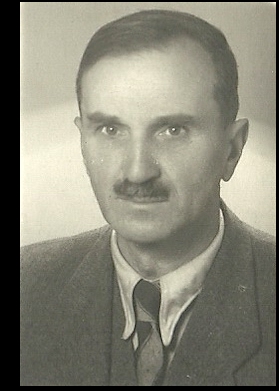
from the family's collection
Jan Kazimierz Zięborak (also incorrectly referred to as Ziemborak in sources, see below) was born on July 1, 1889, in Kalwaria Zebrzydowska, son of Bolesław and Julia née Wilczkiewicz.
He graduated from the Real Gymnasium in Bielsko in 1907, then studied mathematics and physics at the Faculty of Philosophy of Jagiellonian University in Krakow from 1907 to 1911. He worked as a teacher while also studying chemistry at the Lviv Polytechnic (then: Lviv Technical School), which he graduated from with an engineering degree in 1918. From 1917 to 1921, he was an assistant at that university.
In 1914-1916, he served in the Polish Legions as a firemaster (equivalent to a sergeant in artillery). He participated in the defense of Lviv.
In 1921-1928, he worked in the oil industry in Borysław, building the first gasoline factories in Poland.
In 1928-1931, he was an assistant at the Chemical Research Institute in Warsaw (now the Institute of Industrial Chemistry), then an assistant at SGGW in Warsaw, while also serving as director at the Union of Paint and Varnish Factories (until 1939).
Under unknown circumstances - but before the war began - he established contact with "Zadruga", adopting the name "Wojmir".
During the occupation, he initially ran a paint and varnish factory, and later a profitable photographic workshop. He probably financially supported Jan Stachniuk with the income from these ventures. There is also information that he falsely employed him in his own business (an employment certificate was necessary under German occupation conditions). He participated in secret education.
23 April 1944, arrested along with his family as part of a larger German operation, not related to his activities. The Gestapo was searching for a film of the assassination of Kutschera, which was allegedly filmed, and he was involved in photography. He was imprisoned at Pawiak, where he was tortured, and then sent along with his son Kazimierz to the Stutthof camp. His wife was imprisoned at Ravensbruck, and his second son, Mieczysław (a soldier of the Home Army), was executed.
In 1945, the Germans evacuated the camp's prisoners by water to Schleswig-Holstein.
3 V 1945, liberated from captivity by the Allies, he stayed in Sweden for a while, which took care of a certain number of prisoners. In 1945, he returned to his country.
He reestablished contacts with the Zadruga circle, particularly with Stachniuk and Kłopocka.
He worked at the Ministry of Industry and Trade as a department director and advisor to Minister Rumiński in the Central Management of the Chemical Industry, losing his position for unclear reasons, possibly political (in the cited UB documents, he appears as an important figure in the Zadruga circle, which was however an exaggeration).
After leaving the ministry, he worked as the head of technical inspection and laboratory at the Warsaw District Gas Works, while also teaching at the Chemical-Ceramic High School. In 1952-1957, he was the head of the workshop at the Institute of Plastics, and in 1959-1971, he worked at the Bituminous Surfacing Plant in the Central Research and Development Center for Road Technology (COBiRTD). He published articles in the organ of this institution („Prace COBiRTD”).
He was the author of installations for distillation using carrier vapors.
Married to Jadwiga, née Schwarz. Sons Kazimierz and Mieczysław.
Decorated with the Cross of Independence and the Cross of Defense of Lviv.
He died in Warsaw on April 29, 1971, and was buried at Powązki Cemetery.
Sources:
Archive:
Archive IPN
IPN 00231/153 t 1. (Information about "Zadruga", Summary of materials on leading "Zadruga" activists who joined the PPR and are now in the PZPR, 21 IV 1950 - as Ziemborak);
IPN BU 0330/264 t2 Report 17 II 1951
Archive Museum of the Warsaw University of Technology
Kazimierz Ziemborak Remembrance of Prof. Kazimierz Ziemborak, ms., partially typescript, in the collections of the Museum of Warsaw University of Technology;
Literature
Biographical Dictionary of Polish Technicians, t 8, Warsaw 1997
Wacyk A. Jan Stachniuk
Other
Information by Juliusz Zięborak (grandson)
T. Szczepański