
Lech Rokicki „Ran" (from 1945 Ran-Rokicki)
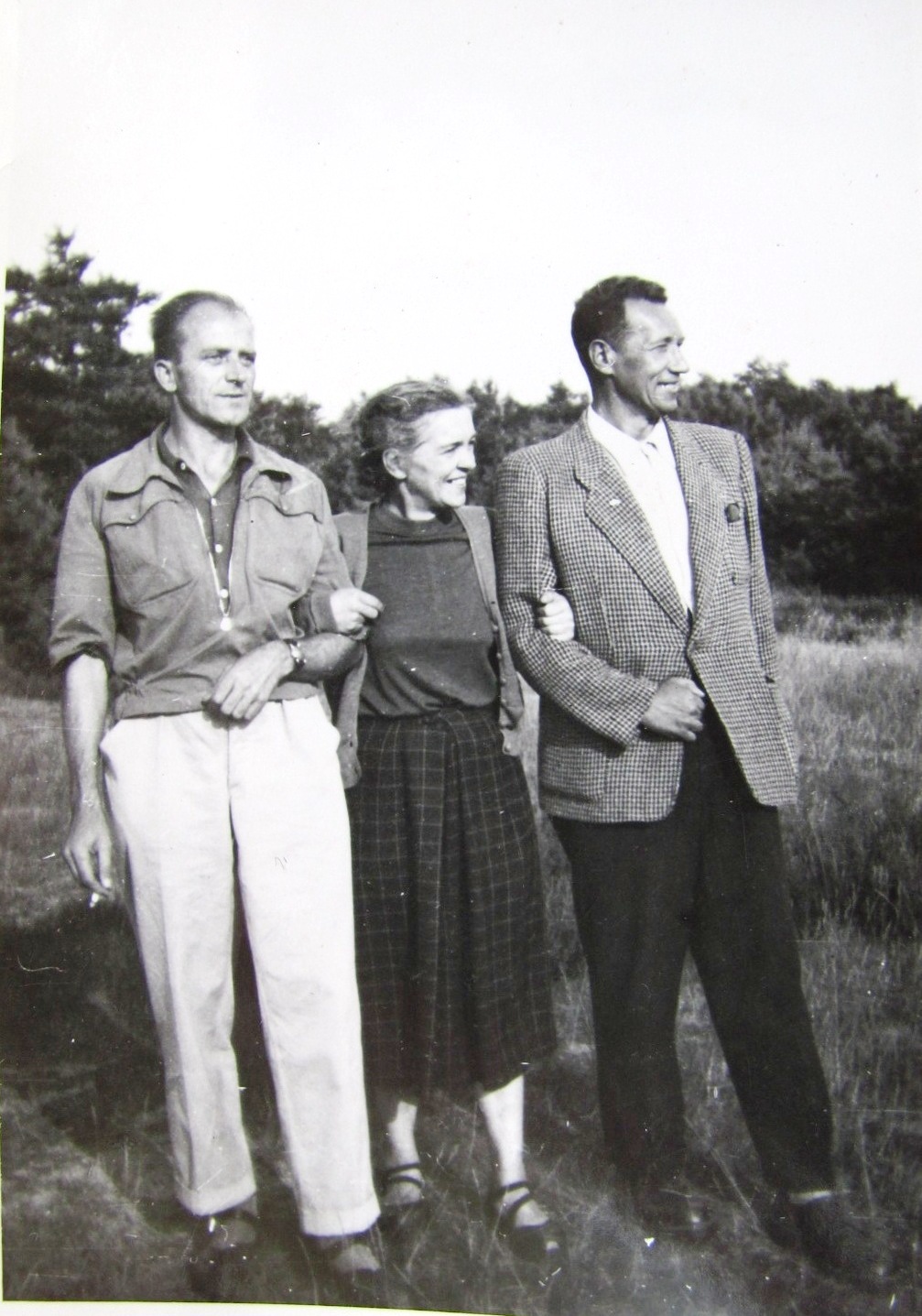 Born April 29, 1919, in Włocławek, son of Czesław Rokicki (murdered by the Germans on March 16, 1945, in the Flossenburg concentration camp) and Maria née Wachowicz. Shortly after his birth, his parents moved to Warsaw. He graduated from a general secondary school and then from the Liceum Zgrom. Kupców m.st. Warszawy (Prosta 14).
He was said to have come into contact with the "Zadruga" before the war, according to a single-source report by B. Stepinskis. Probably from autumn 1939, he participated in meetings of Józef Kowalczyk's "Sławbor" group, sharing the views of Zadruga. He also became acquainted with Jan Stachniuk "Stoigniew", and over time this acquaintance turned into a friendship. On November 11, 1939, he joined the Kadra Polski Niepodległej (at that time, the organization was called the Związek Powstańców Niepodległościowych or Związek Polski Niepodległej, there are also other variants of the name), where he served as a courier initially for District II, later for the headquarters of District I. He also dealt with the distribution of underground publications of KPN.
Becomes a member of the "Zryw" group within the National Party (from 1943, Stronnictwo Zrywu Narodowego).
At the command of Józef Celica „Lechicz", he organizes military training in the "Zryw" Youth Union (the youth wing of the Stronnictwo Zrywu Narodowego), collaborating with Tadeusz Jędrzejewski "Wszebor". In March 1943, he is assigned to the Civil Staff of the Main Command of the KPN, where he serves as a liaison officer directly under Feliks Widy-Wirski "Rosław". He assumes the pseudonym "Ran" (derived from the Slavic tribe of the Ranowie who inhabited Rugen in the Middle Ages), which becomes part of his surname after the war.
The Warsaw Uprising caught him in Powiśle. Unable to reach his unit, on August 2 he volunteers for service in the unit taking over the Power Plant (WSOP Group "Cubryna" within the Combat Group "Krybar"). There, he serves as a sentry and in Firefighting Defense.
On September 6, he withdraws with the rest of the defenders to Śródmieście, where searching for a KPN unit, he falls into German captivity and is placed in St. Stanisław's Church, from where the Germans transport him via the camp in Pruszków to a camp near Koenigsberg/Neumark (Chojna), where a military airfield was being built. In November 1944, he is transferred to a camp near Briest-Brandenburg, where he also worked on building an airfield. He loses his front teeth after being hit by a guard's rifle butt. In April 1945, transferred to southern Lusatia for anti-tank ditch digging, where on April 20 he escaped during a stop in the transport.
In April 1945, he returned to Warsaw and joined the Stronnictwo Pracy (Workers' Party). On May 25, 1945, he was appointed deputy county mayor of Skwierzyna - this was connected to the fact that Feliks Widy-Wirski was then the voivod of Poznań.
In August 1945, he moved to Piła. During his stay in Piła, he was the president of the County Committee of the Stronnictwo Pracy, a member of the Municipal National Council Presidium (from October 1946 to November 1947), and a member of the Consultative Commission of Democratic Parties and Associations. There, in 1946, he entered into a marriage.
In March 1949, he moved from Piła to Józefów near Warsaw, working in Warsaw. That same year, he left the Stronnictwo Pracy, along with Widy-Wirski's circle, remaining non-party for the rest of his life. He began studying at the Warsaw University of Technology, where in 1957 he obtained a degree in civil engineering.
In his apartment in Józefów, Jan Stachniuk was registered after his release from prison (since 1956). The creator of „Zadruga” sometimes stayed there, although he actually lived with a friend in Warsaw, where as a former political prisoner he had difficulties with registration. After 1955, meetings of the Zadruga circle took place there, with the participation of Stachniuk and Kłopocka. He financially supported Stachniuk and organized (among other things, together with Widy-Wirski) help for him. He maintained correspondence with him after "Stoigniew" moved to a care home in Radość (May 1961), also visiting him there after his own move to Płock during official trips to Warsaw.
In 1961, due to poor living conditions in Józefów and the employer's (PBM „MDM”) failure to fulfill the promise of assigning an apartment, he moved with his family to Płock, where he worked as an engineer. From 1969 to 1972, he was the chairman of the Factory Council at PSM in Płock.
After 1956 (often under a pseudonym), he wrote letters and articles for newspapers, taking part in discussions in the spirit of Stachniuk's culturalism, and also addressed historical topics.
Around 1991, he moved to Radom for family reasons.
Married, children: Sławbor, Wojmir, Rosława.
Decorated with: Silver Cross of Merit (1978), Warsaw Uprising Cross (1982), Medal of Victory and Freedom (1982), AK Cross (London 1985), and commemorative badges of the Central Union of Housing Cooperatives.
He died in Radom on January 20, 1994. He was buried in the cemetery in Jedlnia.
Sources
Archives
Archive IPN
IPN BU 0 1236/1314 (especially B. Stępiński's testimony in part 3)
Biography of Lech Ran-Rokicki from 1975 - copy in the author's collections (from family collections)
Attachment to the curriculum vitae - former copy in the author's collection (from family collections)
Award certificates: Silver Cross of Merit, AK Cross, Warsaw Uprising Cross, Medal of Victory and Freedom — scans in the author's collection.
Document of the Poznań Voivode from May 25, 1945 - scan in the author's collection
Testimony of Witness Józef Lechicz-Celica from March 31, 1976, scan of the copy in the author's collection
Opinion of the Presidium of the Municipal National Council in Piła from November 24, 1947 - scan in the author's collection
Fragment of a letter to "Polityka" from 1987 - scan in the author's collection
LR-R notes regarding his correspondence with Stachniuk (4 pages) scan in the author's collection (as mentioned, from the family's collection)
.
Literature
Radzymińska Józefa Always independent, Wrocław 1991
Ran Rokicki Lech I knew Zygmunt Felczak, "Tygodnik Płocki" No. 50/1988, December 11, 1988
Wacyk Antoni Jan Stachniuk 1905-1963. Life and Work, v. 1976, v. 1978, v. III, 1984, ts. sup. xerocopy in the author's collection,
Outline of the history of Piła from 1945 to 2000 Collective work edited by Marek Fijałkowski, Piła 2013
Other
Information: Polan Ran-Rokicki, Sławbor Ran-Rokicki.