
Podgórski Tadeusz "Jantar"
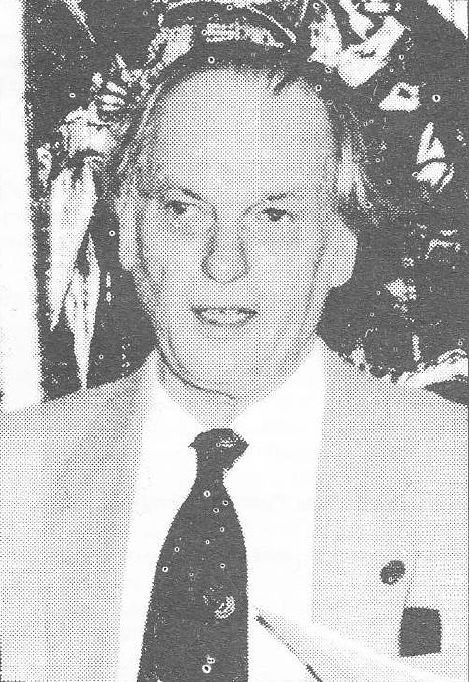
Born September 15, 1919, in Zakroczym in a working-class family that moved to Warsaw (in Wola). He graduated in 1939 from the Technical and Railway High School, receiving the title of technician – mechanic. He was active in the Polish Scouting and Guiding Association (ZHP).
In September 1939, he was at a scout camp and returned to Warsaw in October 1939. He took up work as a laborer while studying economics and sociology at the clandestine University of Warsaw.
He became associated with the "Zadruga" circle by participating in meetings of the "kosynierów" group. He cooperated with Tadeusz Jędrzejewski "Wszebor". In 1941, he was a supporter of moving to active action and, according to his own account, organized the "Zadruga Action Group", which was dissolved after a few months due to Stachniuk's opposition. This episode may be related to similar activities by Robert Grabowski "Radgast", but there is no closer evidence for this beyond the coincidence in time.
He published in underground publications "Zryw" (the organ of the Stronnictwo Zrywu Narodowego) and "Kadra" (the organ of Kadra Polski Niepodległej).
In the Warsaw Uprising, he fought in the Radosław Group (Miotła battalion, Jerzyki platoon), from August 12 in the Czata 49 battalion, Jerzyki platoon, from September 3 on the Sarna sector, Company of Lt. Szczęsny, Jerzyki platoon.
He went through the combat trail: Wola - Old Town, sewers - North Śródmieście - South Śródmieście. Wounded twice.
He went to the uprising in the rank of corporal cadet, and was promoted to the rank of second lieutenant during the fighting.
After the surrender of the uprising, he was deported to a prisoner-of-war camp in Sandbostel, Germany.
After being liberated by Allied forces through Belgium and France, he reaches Italy where he joins the II Corps, serving until 1946 in the 2nd Warsaw Armored Division in the Culture and Press Reference. He gains his first radio experience there.
After demobilization, he settled in Bradford (Great Britain) where he got married and worked as a grinder. In 1948, he joined the emigrant Polish Socialist Party, gradually rising through its ranks to become a member of the Central Foreign Committee of PPS. He also published in emigrant press (including the PPS organ "Robotnik"), sometimes using the pseudonym "Tadeusz Jantar".
In 1959, in the face of a split in the emigrant PPS, he supported Adam Ciołkosz's position against Zygmunt Zaremba's. In 1982, he took on the role of Chairman of the Central Committee of the PPS.
He also was active in emigrant social organizations: the Polish Workers and Craftsmen's Union and the Polish Combatants Association.
In the years 1965-1985, he was the editor of the labor section at the Polish Rozgłośnia Radio Free Europe in Munich. At the same time, he led the work of the Main Committee of the PPS in West Germany and also published the PPS's newspaper there, "Przemiany". His activities contributed to the expansion of the PPS structures in West Germany, which were enriched, among others, by activists from the Solidarity emigration after 1981.
He returned to the UK on retirement, settling in London, but remained active in the structures of the emigrant PPS and in the structures of the independence emigration, becoming vice-president of the National Council (an emigrant substitute for parliament) in London in 1986. He died of a heart attack in London on 5 August 1986.
Buried at Putney Vale Cemetery in London, next to the grave of Adam Ciołkosz, and the funeral ceremonies were attended by, among others, the President of the Republic of Poland in Exile, Kazimierz Sabat, and the chairwoman of the Central Council of PPS, Lidia Ciołkoszowa. The funeral had a Catholic character, which indirectly testifies to at least partial departure from P.'s convictions of his youth. The contacts he maintained with some Zadruga members (Jędrzejewski, Kwaterniak) were primarily social in nature.
Married to Janina Pijanka, two daughters.
Sources
Literature
Ciołkoszowa, Lidia Remembrance of Tadeusz Podgórski, "Robotnik Mazowiecki" (reprint from "Przemiany" vol. XIII, no. 1(96) autumn 1986,
„Przemiany” Special Issue, Volume XIII, No. 1(96) Fall 1986, (Issue Dedicated to T. Podgórski)
Wacyk Antoni Jan Stachniuk 1905-1963. Life and Work, v. 1976, v. II 1978, v. III, 1984, duplicated ts., photocopy in the author's collection (which cites a letter from P. to Wacyk)
Other
Information from Danuta Jędrzejewska-Szmek, Jacek Kowalski (email to the author), Wilhelm Kwaterniak (letter to the author)
www.1944.pl (The website of the Warsaw Uprising Museum)
Tomasz Szczepański