
Dzięcielewski Włodzimierz Jan, "Jeleń", "Jaksa"
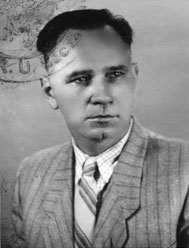 Born January 30, 1907, in Fajsławice, Krasnystaw County, son of Adam and Maria. His father worked as a distiller.
He completed primary school in Wołkowysk in 1924. In 1924-1929, he attended the Humanities High School in Kobryń, where he passed his matura.
In 1929-1931, he completed the Infantry Officer's School in Ostrów Mazowiecka, receiving the rank of second lieutenant on August 15, 1931. That same year, he was assigned to the 61st Infantry Regiment in Bydgoszcz as platoon commander. In 1933, he was promoted to first lieutenant. In 1936-1938, he served at the Officer Cadet School in Bydgoszcz as a Physical Education and Military Training instructor, after which he returned to his parent 61st Infantry Regiment.
In the ranks of this unit (part of the 15th Infantry Division), he participates in the September campaign. On November 4, 1939, he was promoted to captain. On September 17, he was wounded in the leg, and on September 25, he was captured by the German army. Interned in a hospital in Sochaczew, he establishes contact there with people associated with the clandestine structure being formed by Major Henryk Dobrzański („Hubal”). On January 30, 1940, he escapes from the hospital, initially to Warsaw. After reaching the Koneckie Forests in March 1940, he began service in the structure of Major Hubal, adopting the codename "Jeleń." He participated in the skirmish at Wysota (March 1940, according to his own account). It is likely that he held a position in the clandestine structure being formed by Major Dobrzański in the Włoszczowa district, residing permanently in the village of Słupia in that district at the time.
In August 1940, he subordinates himself to the ZWZ. He is appointed commander of the Włoszczowa district of the ZWZ and holds this position from August to October 1940, still using the pseudonym "Jeleń." Although he is not mentioned in M. Tarchalski's source work on the AK Włoszczowa district, the author notes significant gaps in the existing sources regarding this district before 1942. This may explain his absence among the commanders of the district listed there.
From November 15, 1940, he lived in Radom, serving as the head of the operational and training department in the Radom-Kielce district command of the ZWZ-AK ("Jodła"). He used the pseudonym "Jaksa." He participated in the skirmish at Kutery (April 1942). In one of his life stories, he provided information about being promoted to major by the AK's central command on August 15, 1942 (there is also a notarized statement from two former ZWZ-AK officers from 1945), but there is no information about this in official military documents. On September 7, 1942, he was arrested by the Gestapo in Radom and, after three months of severe interrogation, sent to Auschwitz (Oświęcim) as prisoner No. 79294 or 72294. He was later transferred to the Gross-Rosen, Sachsenhausen, and Buchenwald camps.
In the camp, he meets Bogusław Stępiński, who convinces him of the Zadruga ideas. Observing the behavior of some priests in the camps, which he later told his family about, probably also influenced his decision to break away from Catholicism.
He returns to the country in the summer of 1945. In September 1945, he registered with the RKU Bydgoszcz. In December 1945, he settled in Szczecin, starting work in the Municipal Office in February 1946. He was investigated by the local UB as an “Anders’ man.” His name also appears in the materials of the investigation against Jan Stachniuk and others, but there are no specific details about his Zadruga activity.
In 1946, he joined the PPS, and after its dissolution in 1948, he moved to the PZPR.
In 1952, he was removed from the PZPR as a former pre-war officer and member of the ZWZ. The District Registration and Verification Commission of the Ministry of National Defense in April 1952 verified his rank as lieutenant (reserve) (thus not recognizing his "September" promotion). In the issued opinion, the commission stated: A man who is not sincere. He has adapted to the current conditions for bread. He does not deserve trust. It is possible that this opinion also contributed to the GWKL ruling of October 17, 1952, declaring him completely unfit for military service, regardless of his actual state of health. (He had partial paralysis of one leg, a result of a wound from 1939).
In 1956, his membership in the PZPR was restored. Until his death, he worked in managerial positions in Szczecin-based construction companies, most recently as the chairman of the Trade Union Council at the Nadodrzańskie Przedsiębiorstwo Budownictwa Przemysłowego.
He was a member of the Polish Tourist and Sightseeing Society (PTTK), the Polish Bridge Federation (PZBS), the Polish Philatelic Union (PZF), the Polish Sports Writers Association (PZWS), the Polish Athletics Association (PZLA), the Art and Literature Writers Association (SAiW), the Polish-Soviet Friendship Society (TPPR), and the Association of Former Prisoners of War (ZBoWiD).
There is no information about attempts to contact the Zadruga circle after 1956. There is no information about his personal attitude towards the Zadruga movement during that period.
Died September 13, 1969, in Szczecin, buried at the Central Cemetery.
Married to Jadwiga, née Jacynicz, a dentist. Daughter Grażyna (born January 23, 1948), formerly married to Wielgoszewska.
Prepared by: Tomasz Szczepański
Sources:
CAW AP 111332;
IPN 00231/153 t 1. k 1-30 (Information about "Zadruga", April 21, 1950);
W. Dzięcielewski Biography, n.d., n.p. (probably Szczecin after 1946), photocopy in the author's collection.
Photocopies of identity cards - in the author's collections.
Borzobohaty W. Fir Tree. Radomsko-Kielce District ZWZ-AK 1939-1945, Warsaw 1984, (incorrectly listed as "Dzięgielewski Janusz" there, but with the correct pseudonym and function).
Tarchalski M. On the Paths of Little War, Poznań 1994;
Information:
Piotra Fronczaka (affiliate, Warsaw)
Grażyny Wielgoszewskiej (daughter, Szczecin).
Letter from Zbigniew Wielgoszewski (son-in-law) to the author dated 03.11.2010.